OpenLogos Defines the Standards. RunLogos Makes Them Land Better.
OpenLogos is a free, open-source AI engineering methodology. It encodes 40+ years of proven practices — BDD, TDD, DDD, Stage-Gate — as AI-executable Skills that work with any AI coding tool. RunLogos is the professional desktop application that brings every artifact the methodology produces to life.
A structured AI engineering methodology encoded as Markdown Skills. Works standalone with any AI coding tool — Claude Code, Cursor, OpenCode, GitHub Copilot, and more.

The best-practice implementation of OpenLogos. Visualize, edit, orchestrate, and debug every artifact the methodology produces — all in one native desktop application.
OpenLogos encodes the Why → What → How progression as AI-executable Skills. Every layer derives from the one before it — producing a fully traceable chain from requirements to passing tests.
OpenLogos and RunLogos form a closed-loop cycle. The methodology drives what to build; the desktop app makes everything it produces visible, editable, and testable.
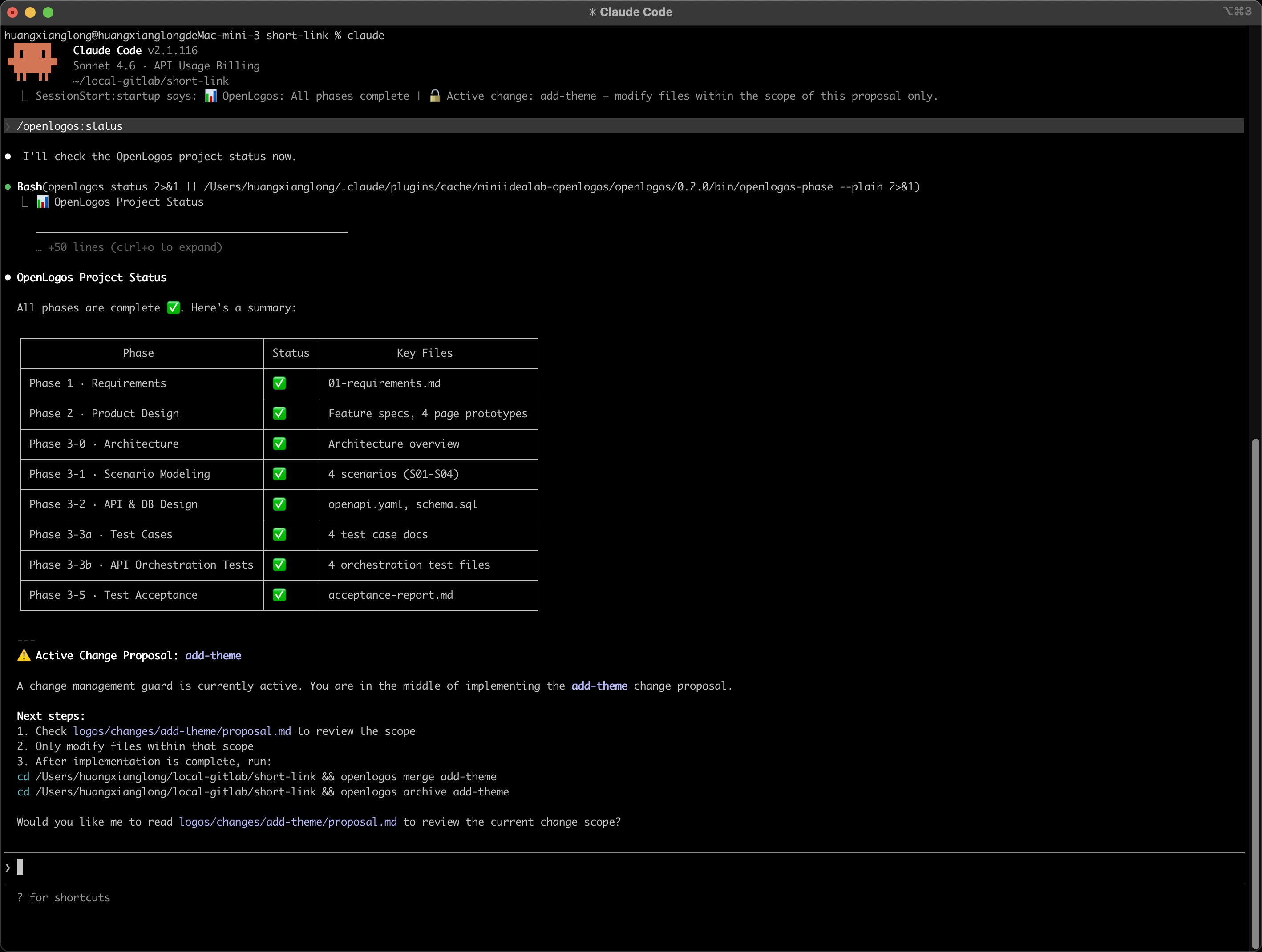
Use OpenLogos Skills in Claude Code, Cursor, or any AI coding tool to execute the full Requirements → Design → Code workflow. The AI reads AGENTS.md and knows exactly which phase to work on and which Skill to load.
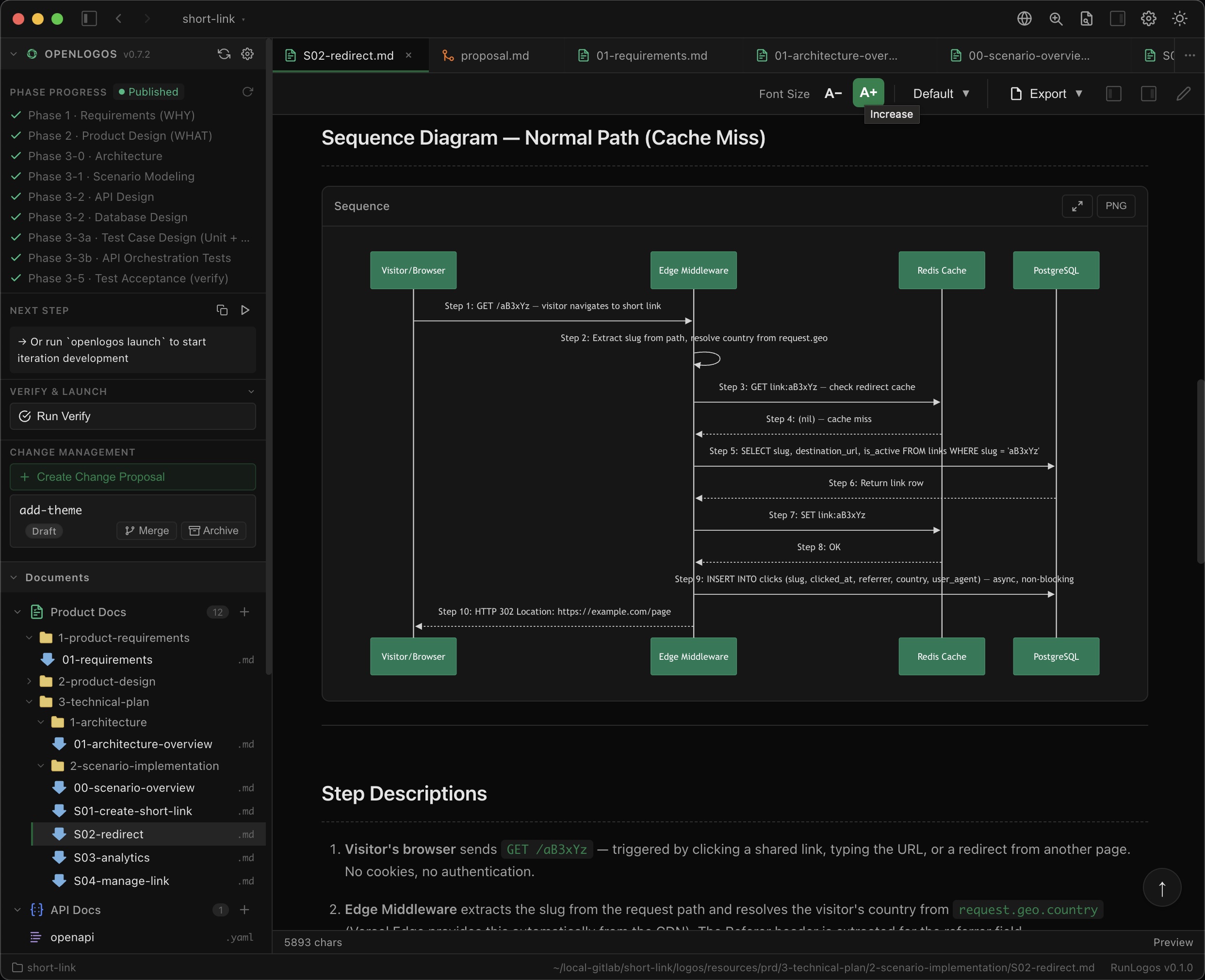
All AI-generated documents — PRD Markdown, HTML prototypes, sequence diagrams, OpenAPI specs, DB schemas, test cases, change proposals — are rendered visually in RunLogos with full editing support.
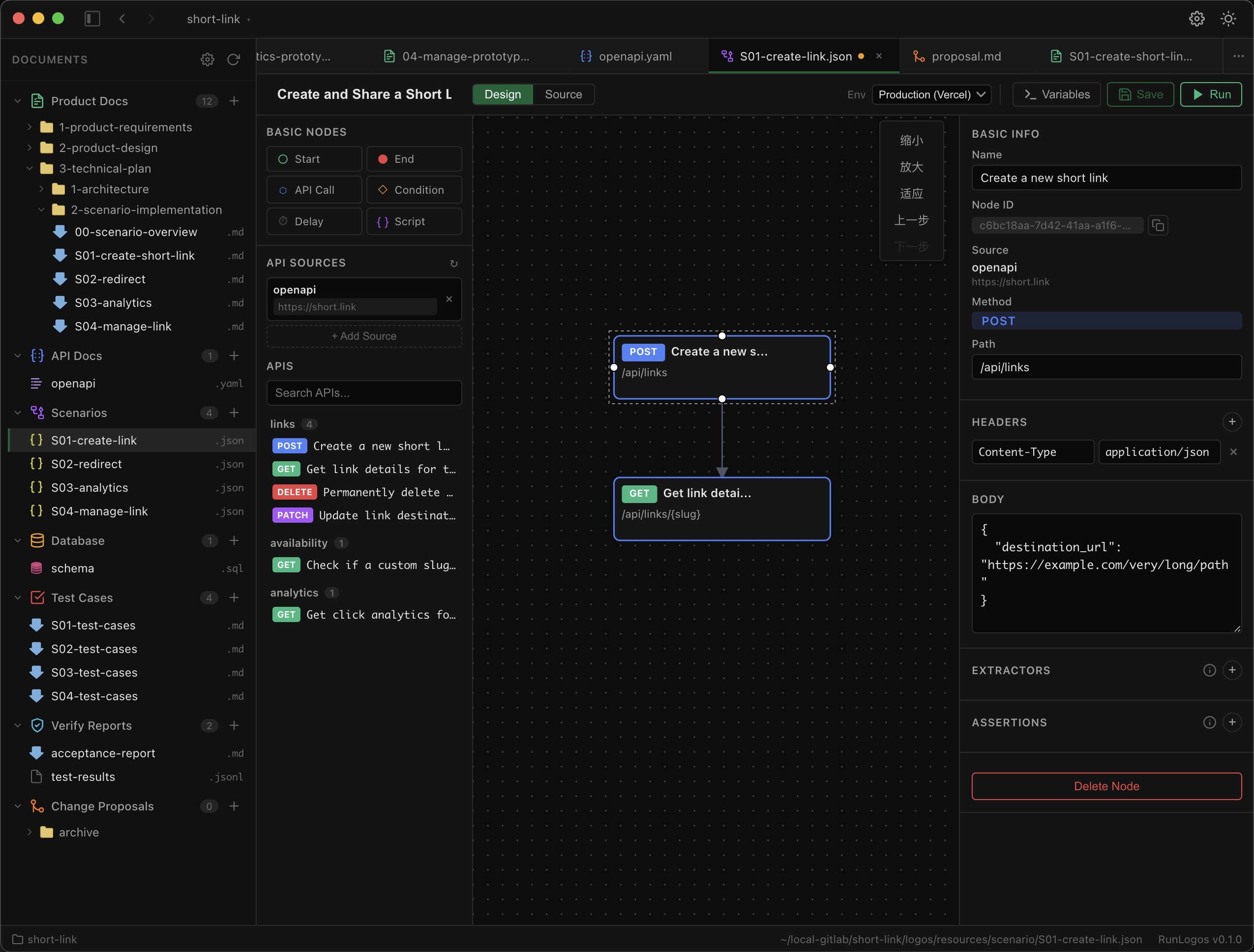
Run the AI-written API orchestration test scenarios directly inside RunLogos. Inspect every request and response in detail. The scenario runner validates your business flows against the OpenLogos Spec Chain — no external test harness needed.
Highlight any text in a RunLogos document, leave inline comments, then generate a structured AI prompt from those comments. Turns vague review notes into precise instructions — dramatically improving how you communicate with the AI coding tool.
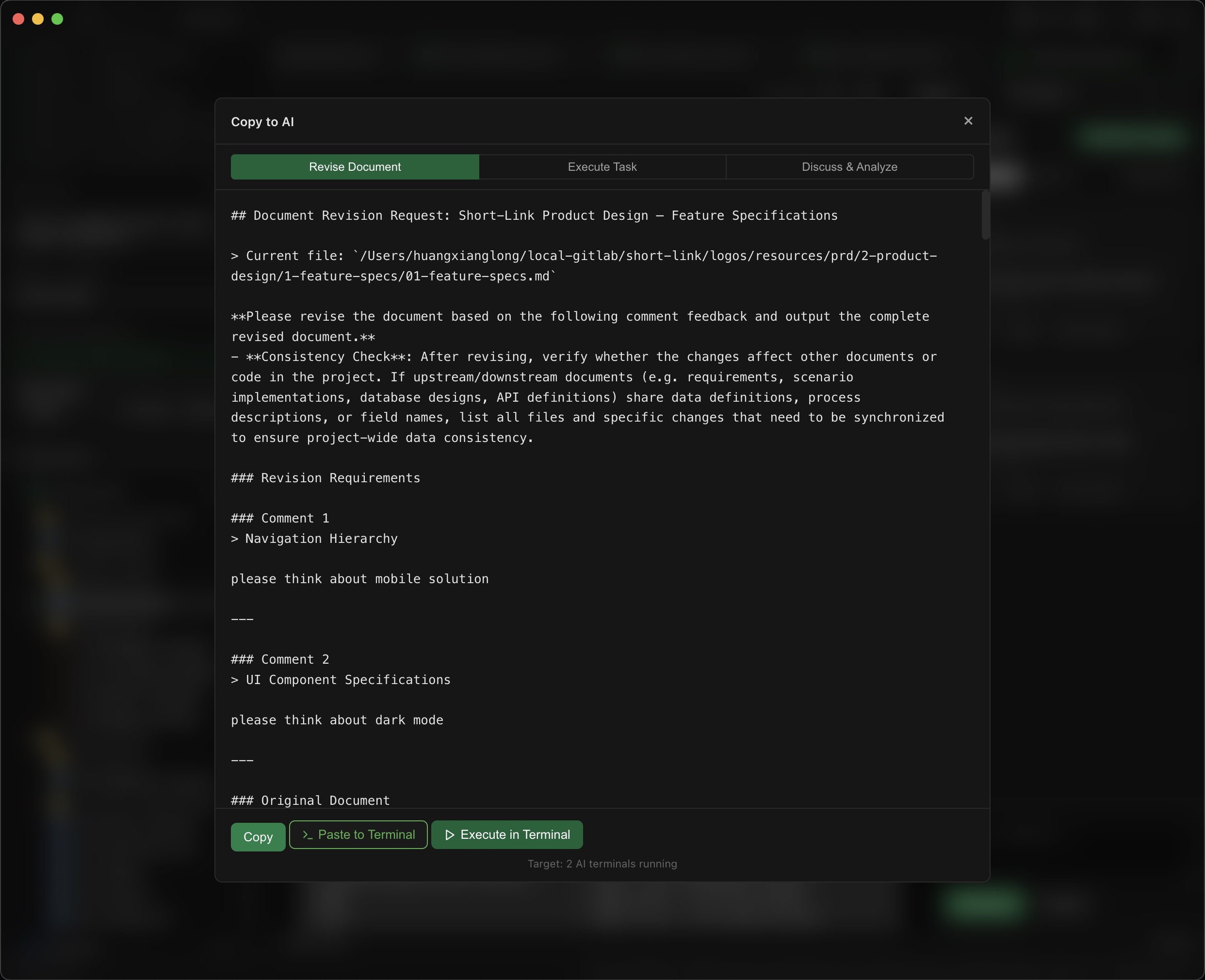
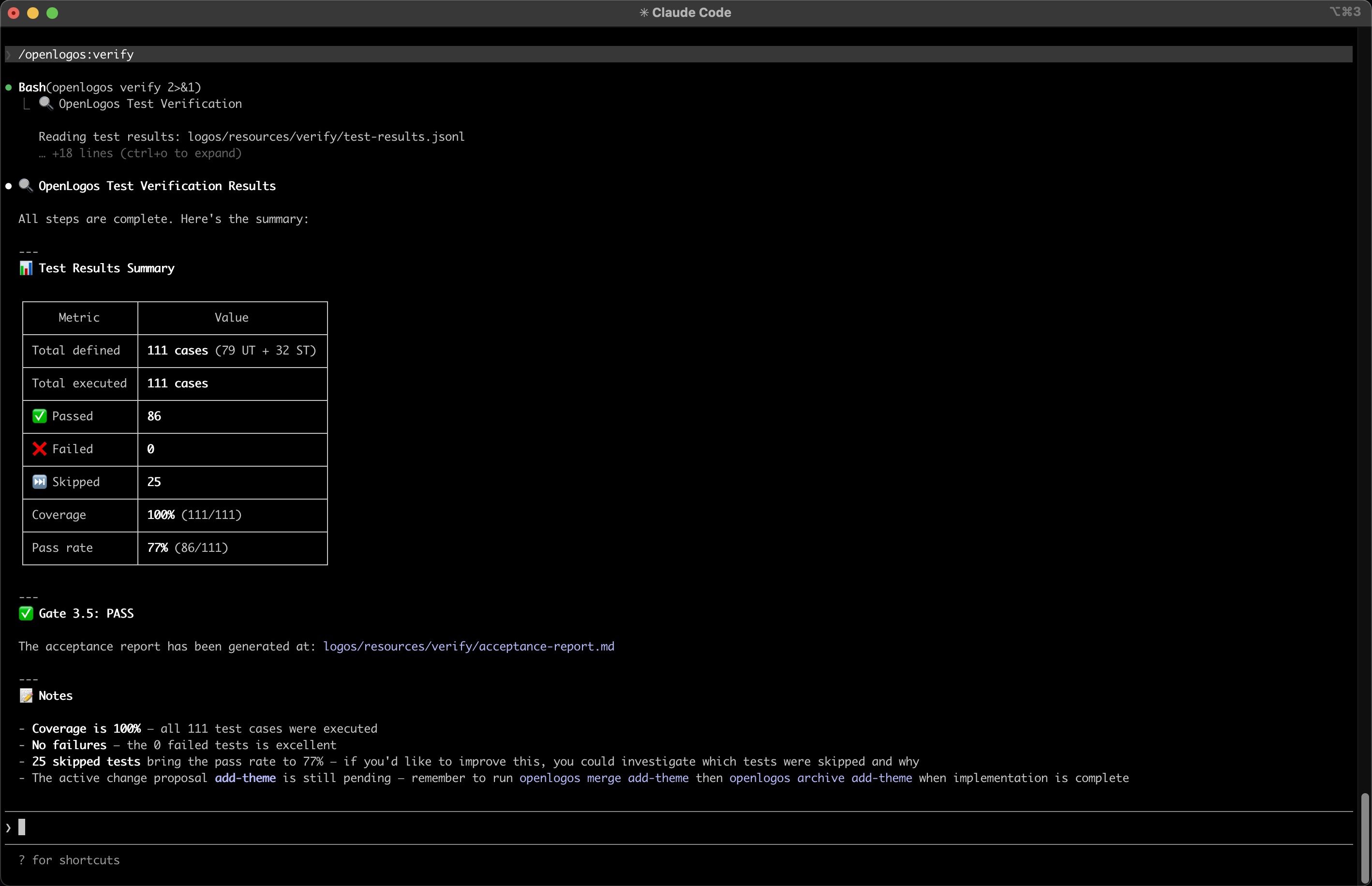
Run the CLI verification command to produce a three-layer traceability report: pass rate, design-time coverage (every defined test case was executed), and AC traceability (requirements → test cases → results). You ship with proof, not hope.
Every project moves through three layers. Requirements come before design; design comes before code. AI never guesses when context is fully defined.
A single scenario ID travels through all phases. Test cases are designed before code is generated. openlogos verify produces a three-layer traceability report.
Every decision lives in a Markdown file. The same documents → the same context → consistent AI output. Reviewable, reproducible, and cumulative across the entire team.
AGENTS.md auto-detects the current phase, loads the right Skill, and enforces rules like "never write code without design docs." AI does the heavy lifting; you maintain control.
OpenLogos is not a new framework invented from scratch — it maps established software engineering methodologies onto AI-native execution.
Phase 1 GIVEN/WHEN/THEN acceptance criteria
Phase 3 Step 3 test-first design, openlogos verify
Architecture, scenario modeling, ubiquitous language
Three-layer progression gates, Gate 3.5
Documents as Context, logos/ directory structure
AI Skills (SKILL.md), AGENTS.md auto-detection
OpenLogos is free and works with any AI coding tool today. RunLogos adds the visual layer that makes every artifact the methodology produces easier to review, edit, and act on.